Ovarian canceris the 5th most deadly form of cancer in Europe and America . Ovarian carcinoma can spread through different process like hematogenous dissemination , local wing , intraperitoneal implantation , and transdiaphragmatic passage etc . In the commonly detected intraperitoneal dissemination , malignant prison cell appear to be embed anywhere over peritoneal surface though mainly in sites of stasis along the peritoneal fluid circulation . The most vulgar form of genus Cancer in ovary is EOC or epithelial ovarian Crab . At least 1/3rd of the example of epithelial ovarian cancer are associate with the formation of ascites . Ascites is the medical condition for fluid buildup in the abdomen . It ’s generally a tortuous exudative fluid have cellular fraction consisting of ovarian cancer cells , mesothelial cells and lymphocites . The neoplastic cell present in theascitesare mainly find to be spheroids but single cells or aggregate of cells . It ’s found to contribute to the spread of Crab to other sites also . It has been proved that spheroid mold ascites remain attach to extracellular intercellular substance through a transmembrane receptor called β1 integrins , indicating that this process may play a part in the propagation of the disease .
Signs and Symptoms of Ascites in Ovarian Cancer Patients
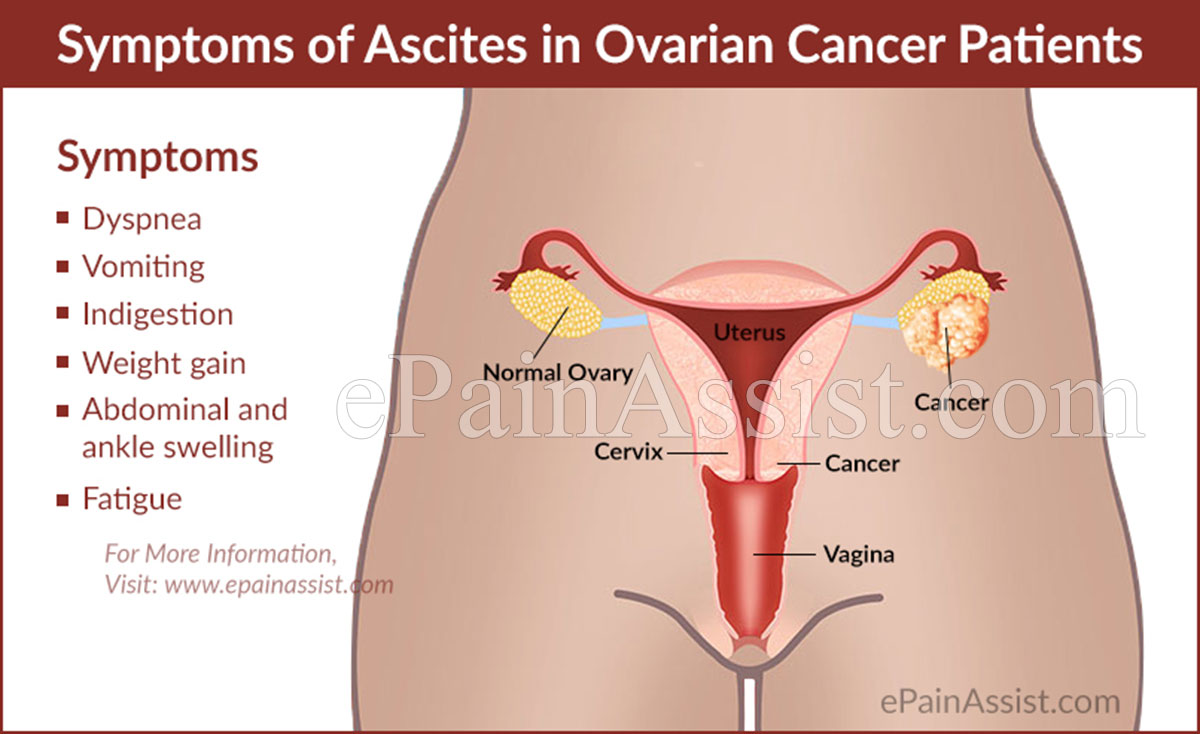
Ovarian Cancer can grow enough to stop the bowel partially or completely . There are many symptom that seem quite rough-cut in ovarian genus Cancer and ascites formed there upon . In fact many symptom of ovarian cancer are further aggravate when ascites is formed . Some common symptoms of ovarian cancer are as follows :
Ascites is associated with raft of physical discomfort . Ovarian Cancer patient when develop ascites show the following sign and symptom :
For ovarian genus Cancer patient , onset of ascites makes them feel very uneasy and they often name it as the worst ever feeling during their genus Cancer signal detection and discourse catamenia .
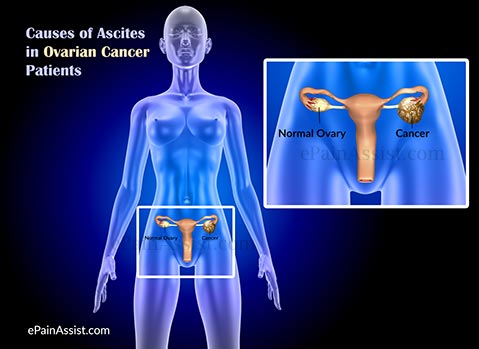
Causes of Ascites in Ovarian Cancer Patients
In a normal human dead body , hairlike membranes present in the peritoneal cavity constantly create free fluids to keep the serosal surfaces of the peritoneal facing lubricated to provide a free passing of fluid between the peritoneum and the neighboring pipe organ . 2/3rd of this peritoneal fluid is reabsorbed into the lymphatic channels of the pessary and is move into the right subclavian vein by the negative intra - pectoral pressure level . Presence of ovarian cancer increases the formation of peritoneal fluid . This is induct by the tumor due to the increase leakiness of microvasculature inside the tumor and obstruction of the lymphatic vessels .
As a termination , accretion of liquid far top fluid re - engrossment , which results in the formation of ascites . investigator have found that the period of ascites within the peritoneal cavity mostly dictate the mode of dissemination of ovarian malignant neoplastic disease .
Some physiologic factors aggravate the process , i.e. the geological formation of ascites and dissemination of ovarian genus Cancer . These factors are gravitational attraction , organ mobility , diaphragmatic insistency , and recesses formed by key anatomical structures .
The three most common intra - abdominal sites of ovarian cancer growth are the greater omentum , veracious subphrenic part , and pouch of Douglas , areas which have easy access to ascites . Isolated ovarian tumor cells carried by ascites primarily colonize to these distant internet site . Thus dissemination of ovarian malignant neoplastic disease and formation of ascites are reciprocally inclusive .
Diagnosis of Ascites in Ovarian Cancer Patients
Sometimes even the oncologist having all-inclusive experience in this field find it difficult to confirm that the ascites is present in an ovarian cancer patient . Normally , an ovarian Crab patient is ask for sealed physical examination when she complains of abdominal fullness , loss of appetite , continuous vomiting and sudden weight amplification .
Here are some common diagnostic methods used in detecting ascites in ovarian cancer :
Treatment of Ascites in Ovarian Cancer Patients
diagnosing of ovarian cancer is very tough at the initial stagecoach due to minimal bit of signs and symptoms associated with the disease . For this reason ovarian cancer is often termed as understood killer . In most of the cases ovarian cancer is detected only after the development of ascites . Right after diagnosing and ratification of ascites in ovarian cancer patients , aesculapian facility is in the first place provided for alleviatory precaution for the affected role . The target of palliative intervention for ascites is to relieve the symptoms that cause pain and uncomfortableness in a affected role .
Treatment of ascites is done in the main by drainage , and rarely by diuretic therapy . On the other hand if it ’s a repeated job then permanent indwelling catheter or peritoneovenous bypass are applied . There is petty grounds around the use of drainage catheters to attain optimum drainage with most inquiry urge the use of peritoneovenous shunts . patient suffering from substantial ascites derive diagnostic embossment from pre - cutaneous drainage .
Here are some common treatment practice on ovarian Crab patients abide from ascites :
The expert in the field of gynecology , oncology and surgical procedure normally team up up to settle the handling process for each individual ovarian Cancer the Crab patients having ascites .
The probability of dissemination of ascites in case of ovarian cancer is very gravid . A act of treatment options are uncommitted to take palliative tending in the main to thin nuisance , uneasiness and disgorgement tendency in a patient . Availability of too few datum and information worldwide regarding this disease is the main baulk before more intensive research and establishment of better treatment procedures . Many anticancer agents have been develop but yet to be applied due to want of countenance from appropriate authorities . A timely detection of ovarian cancer can reduce the luck of establishment of ascites or at least can prevent further spreading of the disease .
