An Overview of Diabetic Retinopathy!
Diabetic Retinopathy refers to retinal changes see in patients withdiabetes mellitusthat is our center undergoes change in retina ( which form the screen of the eye where image is imprint ) due to diabetes .
With increase in the life anticipation of diabetic , the incidence of diabetic retinopathy ( DR ) has also increased . In Western country , Diabetic Retinopathy is the direct cause of blindness .
For the past 10 , there has been a tremendous increase in the number of cases associated with diabetic retinopathy .
Risk Factors of Diabetic Retinopathy
jeopardy factors associate with occurrence of Diabetic Retinopathy are :
Duration : Duration of diabetes is the most important determining divisor for Diabetic Retinopathy . Roughly 50 percentage of patients develop Diabetic Retinopathy after 10 years , 70 percent after 20 years and 90 percent after 30 years of onset of diabetes .
sexuality : relative incidence of Diabetic Retinopathy is higher in females than male person ( 4:3 ) .
Metabolism : misfortunate metabolic ascendence is less significant than duration , but is nevertheless relevant to the ontogenesis and advance of Diabetic Retinopathy .
Heredity : Diabetic Retinopathy is channelize as a recessive trait without sex gene linkage . The issue of genetic endowment is more on the proliferative retinopathy .
Pregnancy : Pregnancy may accelerate the changes of diabetic retinopathy .
Hypertension : Hypertension , when colligate , may also emphasise the changes of diabetic retinopathy .
Others : Other endangerment factors includesmoking , fleshiness , hapless life-style , insalubrious function , zero physical exertion and hyperlipidaemia .
Pathogenesis of Diabetic Retinopathy
fundamentally , diabetic retinopathy is unremarkably get word as a microangiopathy , which means it affect the pocket-size vessel of retina and also affects retinal pre - hairlike arteriole , capillary tube and capillary vein .
Various vascular changes seen in diabetes mellitus include :
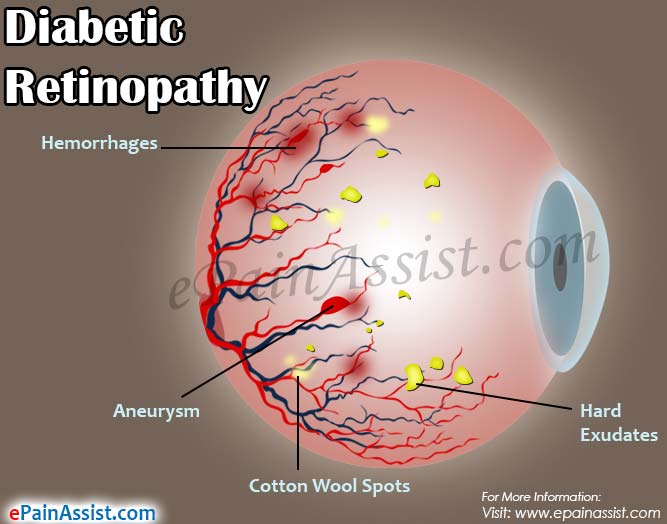
These vascular variety cause microvascular occlusion of retinal vessels that leads to the obstruction of the small vessel of the heart . Obstruction of these vessels cause decreased blood flow in eye , which causes retinal ischemia , which can cause various complications due to lack of blood supply . These complication are as follows : capillary outflow , microaneurysms , bleeding , retinal hydrops , hard exudation , arteriovenous shunts ( intraretinal microvascular abnormalities - IRMA ) and neovascularization .
Classification of Diabetic Retinopathy
Diabetic retinopathy has been diversely classified by dissimilar associations of the world .
before long the most acceptable and come after classification is as follows :
Non - Proliferative Diabetic Retinopathy ( NPDR )
Proliferative Diabetic Retinopathy ( PDR )
Diabetic Maculopathy
Advanced Diabetic Eye Disease ( ADED )
Ophthalmoscope is a machine that is used to count at retina through an ophthalmoscope . The postdate changes and feature of Non - Proliferative Diabetic Retinopathy can be seen :
Non-Proliferative Diabetic Retinopathy has been further classified on the basis of severity as follows:
On the base of high risk characteristics ( HRCs ) describe by diabetic retinopathy work ( DRS ) radical , the Proliferative Diabetic Retinopathy can be further classified as below:-
alteration in macular area need special mention , due to their impression on vision . These change may be consort with Non - Proliferative Diabetic Retinopathy ( NPDR ) or Proliferative Diabetic Retinopathy ( PDR ) . The diabetic edema occurs due to increased permeableness of the retinal capillary vessel and is termed as clinically significant macular edema ( CSME ) if one of the follow three criteria is present on slit - lamp examination with 90D lens :
Clinically , diabetic maculopathy can be assort into four types :
Advanced Diabetic Eye Disease
It is the conclusion issue of uncontrolled proliferative diabetic retinopathy . It is marked by complications such as :
Investigations to Diagnose Diabetic Retinopathy
These let in the following tests :
Management of Diabetic Retinopathy
Screening for Diabetic Retinopathy
It is done to prevent visual loss or blindness occurring from diabetic retinopathy . A periodic follow - up is very important for a timely treatment . The recommendations for periodic fundus examination are as follows :
Medical Treatment for Diabetic Retinopathy
Besides optical maser and surgery to the eyes ( as indicated and described below ) , the medical treatment also plays an essential part . aesculapian handling for diabetic retinopathy can be talk over as follows :
control condition of systemic peril factors is know to work the occurrence , progression and force of laser handling on Diabetic Retinopathy . The systemic risk of exposure factors which need attention are as follows:-
pharmacologic suppression of sure biochemical tract involved in the pathogenesis of retinal change in diabetes is being evaluated and this let in :
part of intravitreal steroidsin reducing diabetic macular oedema is also being stress recently by following mode of administration :
Photocoagulation Therapy for Diabetic Retinopathy
It stay on the pillar in the treatment of diabetic retinopathy and maculopathy .
Either argon or diode optical maser can be used . The protocol of optical maser app is different for macula and rest of the retina as follows : –
Macular Photocoagulation :
Macula is treated by laser only if there is clinically significant macular dropsy ( CSME ) .
Laser treatment is contraindicated in ischemic diabetic maculopathy Macular exposure - coagulation should be consider first i.e. , before Pan Retinal Photo Coagulation since the latter may aggravate macular edema .
Macular photocoagulation includes two techniques:-
Pan Retinal Photocoagulation ( PRP ) or Scatter Laser :
It consists of 1200 - 1600 spots , each 500 μm in size of it and 0.1 sec . continuance . Laser Nathan Birnbaum are apply 2 - 3 disc area from the pith of the sunspot extending peripherally to the equator of eye . In Pan retinal photo curdling out quadrant of retina is first coagulated . Pan retinal photocoagulation produce destruction of ischaemic retina . Indications for Pan retinal picture coagulation are :
Surgical Treatment for Diabetic Retinopathy
Foods to Avoid in Diabetic Retinopathy
patient are recommended to conserve a right diet and keep a halt on their blood cabbage grade . This include avoidance of eminent fatty diet and zero intake of food products with gamy carbohydrates and juicy content . Hence the patient should debar the following food items : dust foods like pizza , burgers etc . , ice pick , sugar , oxygenate drinks , potatoes , chips and other munching snack , oily food item , high cholesterin contain food item and alcohol .
Recommendations in Diabetic Retinopathy
On the other hand , patient is recommended to increase the inspiration of various food items which let in :
Also Read :
