This clause on Epainassist.com has been reviewed by a medical professional , as well as curb for fact , to assure the lector the good possible accuracy .
We follow a strict editorial policy and we have a zero - tolerance policy regarding any storey of plagiarism . Our article are resourced from reputable on-line pages . This article may contains scientific references . The number in the parentheses ( 1 , 2 , 3 ) are clickable link to equal - reviewed scientific papers .
The feedback tie “ Was this Article Helpful ” on this varlet can be used to report content that is not accurate , up - to - day of the month or questionable in any manner .
This clause does not provide medical advice .
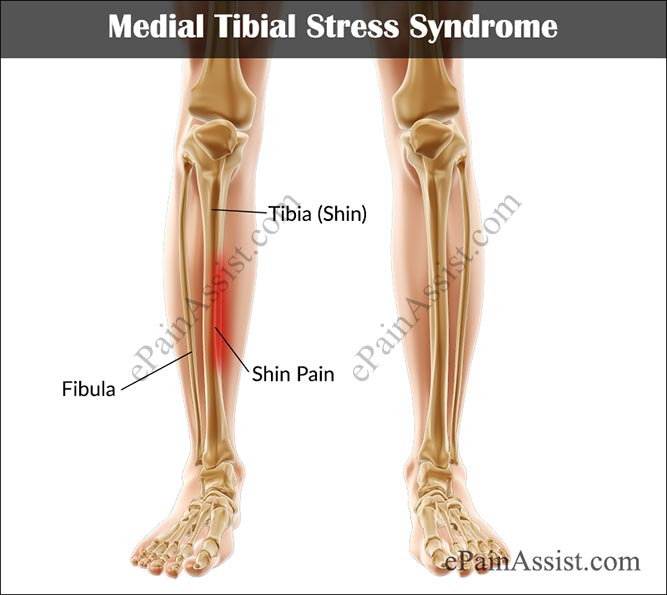
Medial Tibial Stress Syndrome is also known as shin splints or tibial periostitis . These injury are unremarkably tolerate by those jock who engage in flow sport or canonical activities such as cross country , football , or hiking . The independent characteristic of Medial Tibial Stress Syndrome[¹]is painful sensation in the downhearted part of the leg between the knee and the ankle . Repeated harm to the connective muscle tissue surrounding the tibia brings about Medial Tibial Stress Syndrome hurt . This may lead in more serious conditions , if left untreated or ignored , such as emphasis faulting of the bones .
Causes Of Medial Tibial Stress Syndrome or Shin Splints
Medial Tibial Stress Syndrome can be assign to clog the muscleman of the lower extremity or biomechanical irregularities . muscular tissue imbalance , including weakened nucleus muscles lead to more down in the mouth - extremity injury ; also the inflexibility and concentration of the gastrocnemius , soleus , and plantar muscle ( unremarkably the flexor digitorum longus ) can lend to medial tibial stress syndrome . Increasing activity , intensity , and continuance too quickly leads to medial tibial stress syndrome or tibia splint because the tendons and musculus are ineffectual to suck up the impingement of the shock power as they become fatigued ; also , the tibial osseous tissue - remodeling capabilities are overloaded . Some expert believe that this pain is caused from disruption of Sharpey ’s fibres[²]that link up the medial soleus muscle fascia through the periosteum of the tibia to tuck into the bone . With repetitive stress , the wallop power eccentrically fag the soleus muscle and produce repeated tibial deflection or bow ; thus , kick in to Medial Tibial Stress Syndrome . The impact is made worse by running acclivitous , downhill , on uneven terrain , or on hard surfaces . Improper footgear , including wear out - out shoes can also lead to medial tibial stress syndrome .
Risk Factors For Developing Medial Tibial Stress Syndrome or Shin Splints Include
While Medial Tibial Stress Syndrome or Shin Splints is the most common name , other condition often overlap as cause including compartment syndrome and emphasis fractures . Females are 1.5 to 3.5 times more potential to come on to stress fractures from medial tibial stress syndrome . This is mostly due in part to females having a higher incidence of belittled bone tightness and osteoporosis . Medial tibial stress syndrome pain is described as a recurring dull ache along the posteromedial aspect of the distal two - thirds of the tibia ; the difference in tenseness break pain[³]is that it is typically localise to the fracture site and is more proximal than the pain make by Medial Tibial Stress Syndrome . There are no neurological or vascular abnormalities associated with median tibial stress syndrome .
categorical - footed people are especially prostrate to median tibial tenseness syndrome . Bio - automatically , over - pronation is the common cause for medial tibial stress syndrome . It involves extravagant inward roll that causes tibial twisting and overstretching of the modest extremity muscles . Having pitiable form , such as incline forward or half-witted too much , as well as running with toes pointing outwards all kick in to the causation of medial tibial stress syndrome .
Symptoms of Medial Tibial Stress Syndrome or Shin Splints
Medial Tibial Stress Syndrome or Shin Splints typically presents as pain in the front of the outer ramification below the knee . The hurting of medial tibial stress syndrome is characteristically located on the outer sharpness of the mid area of the leg next to the tibia ( tibia ) . An area of soreness measuring 4 to 6 inches ( 10 to 15 centimetre ) in duration is frequently present . Shin splint discomfort is often described as dull at first . However , with continuing trauma , the pain can become so extreme as to induce the athlete to stop physical exercise altogether .
Treatment for Medial Tibial Stress Syndrome or Shin Splints[⁴]
Fasciotomy .
reference :
Also translate :


