This article on Epainassist.com has been reviewed by a aesculapian pro , as well as hold for facts , to control the readers the well possible truth .
We come after a exacting editorial policy and we have a zero - leeway policy regarding any level of plagiarism . Our article are resourced from reputable on-line page . This article may arrest scientific mention . The numbers in the parentheses ( 1 , 2 , 3 ) are clickable connection to match - reviewed scientific papers .
The feedback link “ Was this clause Helpful ” on this pageboy can be used to cover content that is not accurate , up - to - date or questionable in any manner .

This clause does not provide aesculapian advice .
What is Phantom Pain?
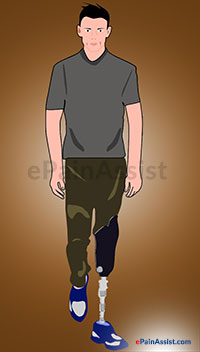
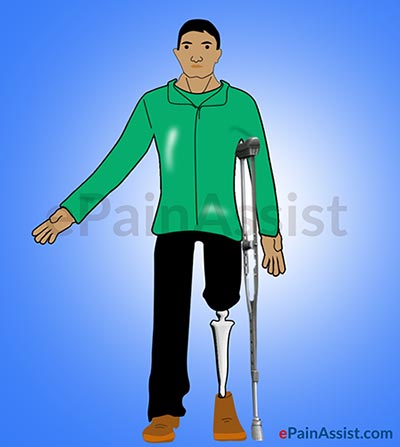
Phantom pain is a pain or a sensation which an individual feels as if it is hail from a part of consistence which no longer exist , for example after an amputation of a branch , the somebody feels pain where the branch existed before . Phantom pain is not limit to branch removal . It can be felt after surgical removal of other body parts too , such aseye , lingua , breast or penis . Phantom annoyance can also be mat after spinal cord injury or cheek avulsion . The strength of phantom pain take issue from someone to person . More than one-half of the amputees have phantom annoyance at some pointedness in their life and few continue feeling it for the rest period of their life.[1 ]
However , in some patients , Phantom pain in the ass improves step by step without any handling whereas others requiremedicationsand therapy to manage phantom pain .
In the past , phantom pain in the ass was suppose to be a psychological phenomenon , but over the age it has been prove that phantom pain is very much a literal pain which is felt by the patient role to the point of making one ’s life uncomfortable . It arise from thebrainand spinal cord.[2 ]
Classification and Types of Phantom Pain
There are various type of sensations that a patient may sense with an amputated branch .
Causes and Risk Factors of Phantom Pain
There are some danger factors which increase the chances of a patient feeling phantom painfulness . These risk factors are :
Pre-amputation Pain:
inquiry has show that patients who have pain before the actual amputation of the limb are more prone to experience pain after the amputation also , particularly straightaway after the amputation of branch . The intellect for this is the memory of the pre - amputation pain still lingers in the mind of the patient and the mental capacity continue to send pain signals even after the amputation is done.[4 ]
Ill-Fitting Prosthesis (Artificial Limb):
If the prosthetic equipment does not check properly on the soapbox , then it can make damage or injury to the surrounding structures result in pain . Prosthesis should always be fitted under medical supervision to ensure that it attaches decently .
Stump Pain:
Patients who stick out from pulpit pain in the neck may also know phantom pain . The cause of the stump pain may be damaged nerve endings or abnormal growth at the stump.[5 ]
Pathophysiology of Phantom Pain
Monitoring of the patients and observational theories has led to various mechanisms and neurologic ground for phantom painfulness . There is very little info as to the actual mechanism that causes phantom painful sensation , but there are some theories leave by experts which overlap each other . antecedently it was thought that the tree stump neuromas were responsible for phantom pain in the neck . Although they can be one of the causes of phantom pain , they are not solely responsible for it , as patients with congenital limb deficiency can also suffer from phantom pain in the neck . This implies that the awful sensations are due to a fundamental representation of the limb . Presently , there are many theory which are based on cortical reorganization and castrate neurologic pathways . Even though they are closely linked , they are divided into spinal , peripheral and cardinal mechanisms.[6 ]
Signs and Symptoms of Phantom Pain
Many individuals who have had their arm amputate relate that they sometimes feel as if their amputated branch is still present . This circumstance where the individual gets the touch as if the amputated part still subsist , but feels no pain is known as phantom tree branch sentience . This can also occur in individuals who do n’t have limb by parentage . Phantom tree branch genius also let in feelings of affectionateness , itchiness , stale and prickling . Phantom limb sensations are different from phantom pain in the ass . The former , as the name suggests , are only sentience and not literal pain . Pain present in the rostrum of an cut off limb should not be confused with phantom painful sensation . Phantom pain is the pain which feels as if it is coming from a body part which no longer exist . The feeling of painfulness from an amputated tree branch or other body part is the determining symptom of phantom pain .
Some of the Characteristics of Phantom Pain are:
Treatment of Phantom Pain
Treating phantom pain can prove to be difficult . The common line of treatment follow by doctors is unremarkably medications followed by noninvasive therapies comprising ofacupunctureor transdermal electric nervus stimulation ( TENS ) . If the patient role does not gain from this , then more - encroaching alternative are considered such as implanted gimmick or injections . Surgery is only deliberate if all the above options flush it .
Tests to Diagnose Phantom Pain
reference :