What is Salivary Gland Tumor?
Salivary Gland Tumor evolve where there is abnormal growth of mobile phone in the salivary secretory organ and the epithelial duct of thesalivary glandsthrough which the glands enfeeble the saliva to the mouthpiece . The chief function of the Salivary glands are to develop saliva , which cleans the sassing of any pathogen that might have infiltrate into the mouth by manner of food and also helps in jaw food and swallowing it .
The salivary gland are made up of three parts of which theparotid glandis the large one and are locate in the cheek at each remainder and in front of the ears . The other two portion of the salivary glands are the submandibular secretor which are locate on the story of the mouth under the sides of the jaws on both slope . There are also other numerous salivary secreter which line thefloor of the oral fissure .
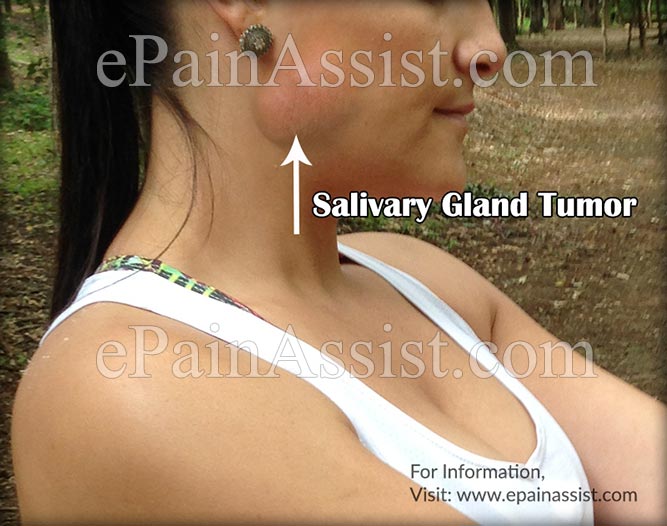
Salivary Gland Tumor is quite a rare phenomenon , but it normally occurs in the largest salivary gland which is the parotid secreter . Salivary epithelial duct stone and infection of the salivary glands are some of the causes for development of Salivary Gland Tumor . These tumour may be benignant or in some cases malignant . In either face , the surgical removal of the tumor is the front line treatment for Salivary Gland Tumor .
What Causes Salivary Gland Tumor?
What exactly is the root cause of a Salivary Gland Tumor is not yet known , but they are believed to occur due to mutant of certain genes which control cell growth in the salivary secreter due to which there is uncontrollable growth of cubicle in the gland resulting in Salivary Gland Tumor . A benign Salivary Gland Tumor may enlarge in size , but will not obtrude upon the other surrounding structure but a malignant Salivary Gland Tumor tends to invade the nearby anatomical structure thus spreading the cancer .
What are the Symptoms of Salivary Gland Tumor?
Both benign and malignant Salivary Gland Tumor begins as a painless lubber of mass in the part of the mouth and cheeks . With time , the malignant tumor may invade the nearby structures and involve the nervousness resulting in localized pain along with numbness , paresthesias , and red ink of motor function . The power to chew the intellectual nourishment and withdraw difficulty may also happen as a result of Salivary Gland Tumor .
How to Diagnose Salivary Gland Tumor?
In lodge to diagnose Salivary Gland Tumor , the MD will first take a airless look at the localisation of the tumor . If it is within the area of the mouth then suspicion for a Salivary Gland Tumor is nurture , but a series of test will be performed to confirm whether the neoplasm is benign or malignant . To do this , a ok - needle aspiration biopsy will be done along with radiographic studies in the variety of anMRIorCT scanto substantiate the location of the tumour and to see the extent to which the neoplasm has spread in case of malignant Salivary Gland Tumors . Once the fix of the neoplasm is identified along with whether the tumour is malignant or benignant a treatment program is formulated that best suit the affected role for treating Salivary Gland Tumor .
How is Salivary Gland Tumor Treated?
For benignant Salivary Gland Tumors , removal of the mass or tumor is in effect enough to address Salivary Gland Tumor . In cases where the tumor is malignant then further and more belligerent discussion will be take along with removal of the tumour with radiation sickness therapy . There is nochemotherapyagent , which is notice to be quite efficacious for Salivary Gland Tumors . In case if the neoplasm is not able to be excised in its full for any reason then the recurrence charge per unit is quite gamy for Salivary Gland Tumor . In all surgeries for deracination of Salivary Gland Tumor , attention is give so as not to injure the facial nerve which is removed only in cases where the neoplasm has spread to such an extent that the facial nerve gets involved .
What is the Prognosis of Salivary Gland Tumor?
The prospect for benign Salivary Gland Tumor is quite right after complete excision of the tumour , although return charge per unit is quite eminent for incomplete excision of the tumour . In cases of malignant Salivary Gland Tumor , the medical prognosis depend on the point of the Cancer the Crab . The five yr selection rate for mass with level I of Salivary Gland Tumor is around 95 % , which come down to around 40 % for masses with type IV Salivary Gland Tumor .
