This clause on Epainassist.com has been reviewed by a aesculapian professional , as well as tally for fact , to assure the readers the best possible truth .
We observe a nonindulgent editorial policy and we have a zero - tolerance policy regarding any level of plagiarism . Our articles are resourced from reputable on-line pages . This article may contains scientific references . The numbers in the parenthesis ( 1 , 2 , 3 ) are clickable tie-in to match - reviewed scientific papers .
The feedback liaison “ Was this clause Helpful ” on this Thomas Nelson Page can be used to report content that is not accurate , up - to - date or confutable in any manner .
This article does not supply aesculapian advice .
What is Symbrachydactyly?
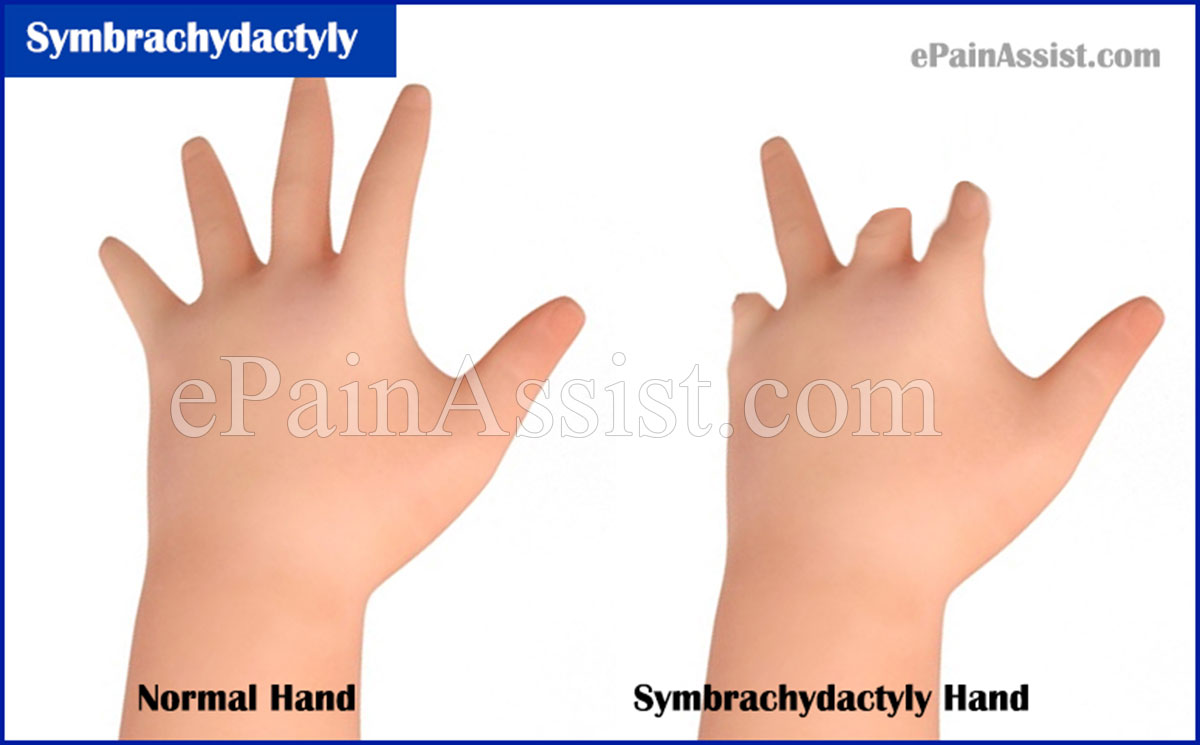
Symbrachydactyly[1]is a congenital abnormality in which a child is born with abnormally short fingerbreadth or toes which are webbed or link up together . In some event of this condition , there may be complete absence seizure of fingers or toe even if the fingers or toe are present there will be no bones in them to keep them straight and in their normal positions . It is quite a rarified disease without an exact cause for the condition . OR is one of the way by which Symbrachydactyly is treat . Symbrachydactyly essentially has three forms , one is in which the ovolo is comparatively normal but there are abnormally short digit . This is the meek material body of this precondition . The 2d case is in which only the thumb and little finger is present and all the other fingers are either webbed or unite together or are overlook . This is the moderately severe form of this precondition . The third form which is the most severe form is in which all the finger including the thumb are missing or are abnormally myopic and webbed together .
What is the Cause of Symbrachydactyly?
legal age of the subject of Symbrachydactyly do not have a known case . Research suggests it is not a condition which can be said to have been inherited . In some cases , Symbrachydactyly is catch in children with agenetic diseaseknown asPoland Syndromein which the breast muscle are not fully developed on one side .
What are the Symptoms of Symbrachydactyly?[2]
Symbrachydactyly is a condition which is easily visible when the tyke is hold . Sometimes , an ultrasound can also show whether the child has this condition or not . The classic symptom of Symbrachydactyly are the child having abnormally short fingers or toe and they will be joined or web together , inability to utilise the hand suitably .
How is Symbrachydactyly Diagnosed?
Symbrachydactyly is a circumstance which is quite unmistakable at the time of birth and in some case it can be even seen before birth by an ultrasonography . In absolute majority of the cases , the underlying brawniness , ligaments , and tendons along with the bones will also be affected and hence an ex - ray to look at these structures may also facilitate with the diagnosis and formulate a treatment plan for well recovery .
How is Symbrachydactyly Treated?[3]
operating room is the most preferred manner of handle Symbrachydactyly . The nature of operating theater done will differ and depends on the severity of the condition . The surgery is normally done when the child is between 6 to 12 months of historic period . In some severe cases of Symbrachydactyly , extra surgeries may be required which may be done later in life . For mild forms of Symbrachydactyly , only modest rectification in the skin and cushy tissue may be enough to treat the status . In cases where the precondition is more severe , then a bone carry-over commonly from the toes will postulate to be done to lengthen the fingers . In some cases even a toe may be transplant to the hand to serve in gripping and prehensile objects . Some of the knottiness that can be encountered after surgical process are infection , inability for the bone to in full heal , incomplete correction , stiffness of the spliff , frequent finger’s breadth disruption later on in life . Once operation is done to correct Symbrachydactyly , the child is placed in a mold for about four weeks to allow healing of the bones . After removal of the cast , a splint will be utilize for separating the finger of the deal for about six weeks . Physical and occupational therapy will then be done to trim clumsiness and strengthen the fingers . The child will need frequent followup in the ensuing years to check the healing and affair of the finger to mold if extra surgery may be required for further correction .
What is the Overall Prognosis of Symbrachydactyly?
When we utter of the prognosis of Symbrachydactyly then surgery has been shown to be very successful in treating majority of the cause even though additional surgeries may be required to better function and appearance of the digit even more but all say and done there will always be a dissimilar look to the digit than the normal finger which the small fry will have to cope up with . The kid may also utilize prosthetics for good function in the ensuing twelvemonth as the child grows to cope up with Symbrachydactyly .
extension :
